india

Homestays Part 1 - Objectives and Challenges

Homestays are a powerful tool to begin a community-based entrepreneurial effort, but they need to be approached with tremendous humility and planning.

Homestay in AP, India

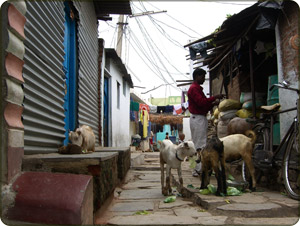
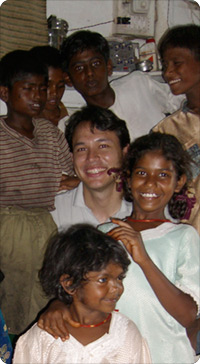
In 2006, I spent a week living with a family in the Indiramma Nagar slum cluster of the city of Hyderabad. Sheik Baba and Sultana – along with their four children, mother, and niece – hosted me in their small, single room home by the airport wall. Baba and Sultana were perfect hosts. They opened their small home to me and I greatly enjoyed the time I spent with them: despite the extreme heat of the Indian summer (115 °F) and our limited means of communication.

Weeks later while working with our business partners (a group of local women in the slum), a colleague brought up the fact that I had stayed with Baba and Sultana. There was a stir of comments among the women.

"What is it?" I asked.

"The family is very poor,” my colleague translated, “they are surprised that you could stay with them.”

They were particularly impressed that I had no problems eating and drinking with the family: Westerners aren't normally known for very strong stomachs. To be honest, I had been a bit concerned when Sultana handed me that first cup of water, but it hadn't really seemed practical to refuse. Did I mention how hot it was? After the first cup went down though, and stayed down, I accepted plenty more.

In fact, besides my almost comical habit of crying when eating – no matter how little spice Sultana tried to cook with – everything had gone great. I had made friends and experienced a side of the community that few outsiders ever get to see. Plus, most of these women who we were building a new business with had met us as a result our team's homestays. Introductions had led to introductions, but it had all started there in the community.

Quite a productive week.

Creating markets for the base of the pyramid

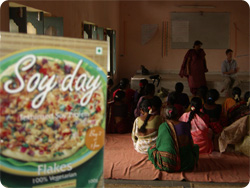
Creating markets for soy protein in Andhra Pradesh, India

Where was the market for Solae's protein in rural India? It needed to be created.

On Monday, the Wall Street Journal published an article by my colleague Erik Simanis about our work developing new markets in the base of the world's income pyramid. Erik is a pioneer in business development methodologies for the BoP.

The Base of the Pyramid is not actually a market. True, those billions of low-income people have a lot in common. But they don't have two of the vital characteristics you need to have a consumer market. They haven't been conditioned to think that the products being offered are something one would even buy. And they haven't adapted their behaviors and budgets to fit the products into their lives. A consumer market is nothing less than a lifestyle built around a product.

Erik uses a range of examples including bottled water in the U.S., P&G's PUR water cleaning powder, KickStart's MoneyMaker pump, and our own work with Solae in India to demonstrate that companies should think twice before assuming a market for their products exists, even if those products are well designed. And if a market doesn't exist then traditional market entry approaches - the kind that most companies use and most managers are taught - are largely ineffective. Instead, companies need to learn to create markets.

Since the first BoP Protocol pilot in 2005, our work has focused more and more on the challenges of creating new markets and building the enterprises that enable them. Over the years, we have learned a number of hard, but handy, lessons. Three of those lessons are described below.

Belated Postcards from India and Brazil

Everyone knows what it's like… you've got stack of postcards, a head full of great experiences and even with all your best intentions, you just get too caught up in what you're doing to write it all down and pop them in the mail.

Well writing posts can be the same way, so here's a belated summary of the last six months in India and Brazil.

Exceptional Lives - Pilgrimages about People

I've often said that one of the greatest joys of my work is the exceptional people that I get to meet and to develop friendships with. Whether or not it's Salim Mohamed and Sammy Gitau in Kenya, Murali Ramisetti in India, or Theresa Williamson in Brazil, I have been blessed to know so many people who are busy painting their visions of a better world into reality. So I've often wondered, "What it would be like to just go on a pilgrimage to find and learn from such people?"

Patrick off to play again - BoP Protocol in India

This weekend I'm heading out to join another Base of the Pyramid Protocol project, the second ever actually, this time working with the Solae Company in India. You may recall that the first implementation of the BoP Protocol was last year with SC Johnson in Kenya, of which you can see many past articles here on BRINQ.com. The Solae Protocol project is via a partnership between Solae, Cornell University, and Enterprise for a Sustainable World (ESW). ESW has hired me to join up with Protocol co-director Erik Simanis and BoP consultant Tatiana Thieme (both who I worked with on the Kenya Protocol pilot) to facilitate Solae's implementation in low income communities in Mumbai and Hyderabad.

This will be my first trip to India, and besides being personally excited for the experience, I believe the project will be a great boon for the continuing development of the Protocol. Not only are the target region and sponsoring company quite different than the last time around, but the structure of the project itself is an evolution of what we did in Kenya… most significant is the inclusion of local professionals and students on the core Protocol team.

I'll be reporting from the field every chance I get, both here and on other upcoming sites I'll be listing links to.

And of course, I'll always be on the look out for cool innovations and toys too!

"Poti Baba" - the Magic Man, India's Arvind Gupta

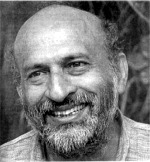
Arvind Gupta

Arvind Gupta, the winner of India's first National Award for Science Popularisation, has taught hands on science and toy-making workshops to thousands of children throughout India. His trash-to-treasure lessons have been written up in numerous books, freely available for download.

"Twenty-five years ago, I discovered that if children see a scientific principle incorporated into a toy, they understand it better." - Arvind Gupta

At BRINQ, we've long been fans of magic man and toy tinker Arvind Gupta and his Little Toys, so we think it's high time we do our part in sharing his work with the world!

The Power of Play - Relief for Children of the Tsunami

How do you help children cope when their whole world has been swept away?
A number of tsunami relief organizations and corporations are showing that one answer is helping children do what they do best . . . play.

The Christian Children's Fund reports on CCF's role in the tsunami relief and helping children heal through play:

Amidst the death and destruction, CCF’s child centered spaces are providing an oasis of hope for children left homeless or orphaned by the tsunami. The child-friendly places provide organized activities to thousands of children living in camps who have lost their homes in Indonesia, Sri Lanka and India.

Toni Radler, CCF’s Communications Director, visited the child-friendly places while assisting in the tsunami-affected areas. “They are making a huge difference for the children. Before these spaces were created, children were walking around listless or sleeping part of the day. Now they are playing games and singing, and even receiving informal education, such as math instruction. Several of our parent volunteers are actually kindergarten teachers,” she said.

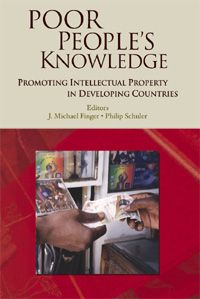
Poor People's Knowledge - Handmade in India

A review of the 2nd Chapter of World Bank's "Poor People's Knowledge", about the challenges and opportunities in promoting the knowledge and innovations of the world's poor.

Poor Peoples Knowledge"How can we help poor people to earn more from their knowledge—rather than from their sweat and their muscle? This book is about promoting the innovation, knowledge, and creative skills of poor people in poor countries, and particularly about improving the earnings of poor people from such knowledge and skills."

The World Bank's "Poor People's Knowledge: Promoting Intellectual Property in Developing Countries" is a collection of essays by researchers and practitioners covering the subject of knowledge development and intellectual property in the Base of the Pyramid. The book (available in PDF) is an informative and thought-provoking read. Today we touch on Chapter 2 "Handmade in India" by Maureen Liebl and Tirthankar Roy.

India - Innovation Central

India comes into its own as a hub for innovation as companies and organizations respond to problems with new innovations. The Economic Times and Wired Magazine report on new inventions coming out of India: a water-riding bicyle, electronic sticks for the blind, handwriting emails and more.Different problems require new innovations in India.

The Economic Times of India reports a number of "Bond-like" innovations:

Syndicate content