
Base of the Pyramid Protocol
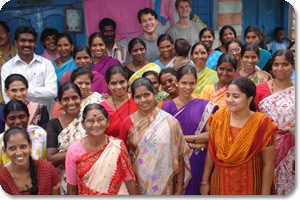
The Base of the Pyramid Protocol is a corporate innovation process for sustainably serving communities in the base of the world's income pyramid (BoP). With the BoP Protocol, companies work to simultaneously develop new markets and lift up low-income communities through the co-creation of new innovations and enterprises in the BoP.
As a multi-year, action-based methodology the BoP Protocol enables companies to build a deeper understanding of the challenges & aspirations of low-income communities, while at the same time launching new businesses that capitalize on those experiences. Community members act as equal partners to the company throughout the process as the two groups strive together to build mutually beneficial enterprises and markets.
By building common ground between companies and communities, the BoP Protocol is a model for enterprise and market co-creation. Via the BoP Protocol, a company can:
- Build a deep understanding of BoP communities' needs and aspirations
- Develop key local partnerships in BoP communities that form the foundation for a sustained business venture
- Incubate and launch businesses that are embedded in the community's aspirations, strengths, and values
- Co-create new markets via new value propositions that neither the company or its community partners could have created on their own

About the BoP Protocol initiative
The BoP Protocol is a multi-institution collaboration between leading business and academic institutions, involving a number of academics, professionals, and non-profit leaders from a variety of organizations.
Cornell Directors
Development of the BoP Protocol itself is directed out of Cornell University's Center for Sustainable Global Enterprise (CSGE). The BoP Protocol's Co-Directors are listed below.
- Erik Simanis - Senior Research Associate
- Stuart L. Hart -Samuel C. Johnson Chair in Sustainable Global Enterprise and Professor of Management
- Duncan Duke - Senior Research Associate
- Gordon A. Enk - Executive in Residence
Field Leaders/Experts
There are several BoP Protocol practitioners that have been involved since the first implementation of the BoP Protocol and who continue to both lead BoP Protocol implementations in the field and contribute to the Protocol's development.
- Justin DeKoszmovsky - SC Johnson in Kenya
- Patrick Donohue - SC Johnson in Kenya, Dupont/Solae in India, Enterprising Health in the USA
- Duncan Duke - TWI in Mexico, SC Johnson in Kenya
- Erik Simanis - SC Johnson in Kenya, Dupont/Solae in India, Enterprising Health in the USA, TWI in Mexico
- Tatiana Thieme - SC Johnson in Kenya, Dupont/Solae in India
Key Contributors
- Michael Gordon - Professor of Business Information Technology, University of Michigan
- Ted London - Director of Base of the Pyramid Initiative, William Davidson Institute
- Mark Milstein - Director of Center for Sustainable Global Enterprise, Cornell University
For more information, see bop-protocol.org or the BoP Protocol Initiative at the Cornell Center for Sustainable Global Enterprise. You can also read Patrick's BoP Protocol Articles on BRINQ.com
BoP Protocol implementations
Since the initial BoP Protocol pilot by SC Johnson in 2005, several other BoP Protocol initiatives have been launched: each in a different geography and with a different set of partners facing new challeges and opportunities. You can read more about the four on-going projects:
- SC Johnson in Kenya - the pilot implementation of the Protocol, launched in 2005, and directed out of Cornell University
- DuPont/Solae in India - the second implementation of the Protocol, launched in 2006 and directed through Enterprise for a Sustainable World and Cornell University
- The Water Initiative in Mexico – launched in 2008 with the guidance of Cornell University, TWI is the first Protocol implementation sponsored by a start-up company
- Enterprising Health in Michigan– the first U.S. implementation of the Protocol, launched in 2008, Enterprising Health is sponsored by Ascension Health under the guidance of Enterprise for a Sustainable World


